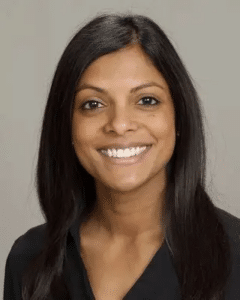
 This month, we’re excited to feature Dr. Mohamed Elnakib, PsyD ’22. He is a Behavioral Health Clinical Administrator and a licensed clinical psychologist at Innercare.
Q: What was your specific area of study at CSPP/Alliant, and what year did you graduate?
A: I earned my PsyD in 2022 in Clinical Psychology with a Multicultural and International Emphasis.
Q: Can you share a little about your current role and the path that led you there after graduating from CSPP/Alliant?
A: I am currently the Behavioral Health Clinical Administrator and a licensed clinical psychologist at Innercare, a federally qualified health center (FQHC) in El Centro, California, serving predominantly migrant, refugee, and underserved communities. My role integrates direct clinical care, clinical supervision, program development, research, and grant writing, with a strong emphasis on trauma-informed and culturally responsive services.
In addition to my clinical work, I serve as an adjunct professor at Alliant University, where I currently teach Family Systems Theory and Qualitative Research Methods. In previous semesters, I have also taught Multicultural Foundations in Psychology. Across my professional roles, I intentionally integrate clinical practice, teaching, research, and advocacy within a social-justice-oriented and multicultural framework.
At Innercare, I provide psychotherapy, intake assessments, crisis intervention, and clinical supervision to graduate trainees, while also leading outreach initiatives and contributing to policy and program development to expand equitable access to behavioral health services in under-resourced communities. My research and scholarly writing focus on activism as self-care, racial trauma, and the impact of systemic oppression in clinical practice. My work has been published in peer-reviewed journals, including Women & Therapy, and my perspectives on trauma-informed responses to mental-health crises have been featured in the San Diego Union-Tribune.
I am also deeply committed to advocacy for Middle Eastern and North African (MENA) representation in psychology. I am an active member of the American Arab, Middle Eastern, and North African Psychological Association (AMENA-Psy), where I previously served as the organization’s founding Chair of the Advocacy Committee and continue to hold leadership roles advancing equity and inclusion initiatives. Most recently I was elected as the American Arab Middle Eastern & North African member-at-large representative for Division 45: The Society for the Psychological Study of Culture, Ethnicity and Race, and currently, I serve as the AMENA-Psy Fellow within the Leadership Development Institute of the Coalition of National Racial and Ethnic Psychological Associations (CONREPA).
Q: What experiences or lessons from your time at Alliant have had the greatest impact on your professional journey?
A: One of the most meaningful lessons I learned at Alliant was the importance of never silencing myself, especially when it comes to my values, goals, and commitment to social justice. I encountered challenging experiences during my training that ultimately taught me how to advocate for myself and for my communities, and how to speak up in the face of injustice.
Alliant helped me learn that meaningful change often requires the courage to say the things that may feel uncomfortable in professional spaces. I also developed a deep commitment to multicultural humility and cultural responsiveness in my work with diverse communities. These experiences shaped my belief that psychologists have a responsibility not only to provide clinical care, but also to remain actively engaged in service, advocacy, and systemic change.

Q: Was there a particular course, faculty member, fellow student, or project at Alliant that shaped your interests or career direction?
A: I was profoundly influenced by several faculty members and colleagues during my time at Alliant, including Dr. Julii Green, Dr. Jennifer Staples, Dr. Jill Sirikantraporn, and my colleague and close friend, Dr. Eric Mendoza, who was a member of my cohort. Their mentorship and support played a critical role in shaping my research trajectory and academic scholarship, and they continue to influence my work today, including my current collaboration with Dr. Mendoza at Innercare.
I was also deeply impacted by Dr. Meghan Fagundes, who served as my clinical supervisor and is now a valued colleague at Alliant. Through their mentorship, I learned the central importance of trauma-informed and social-justice-informed practice across all aspects of my professional identity. They encouraged me to remain grounded in my values, to persist despite challenges, and to continue pursuing advocacy and activism, even when those commitments were questioned or misunderstood.
Q: What advice would you offer to current Alliant students or recent graduates who want to follow a similar path?
A: Do not be afraid to speak your truth and to name injustice when you encounter it. Your voice matters. Seek out mentors, allies, and professional communities who share your values and who will support you in your growth. Building strong connections with people and organizations that align with your commitment to equity, service, and cultural humility can be transformative both professionally and personally.
Q: Have you been involved with the Alliant Educational Foundation in any way? If so, please elaborate further.
A: Yes. I recently became involved with the Alliant Educational Foundation as a clinical supervisor, currently supervising three G1 students placed at Somali Family Services and the Family Resource Center. I am deeply grateful for the opportunity to mentor and train students who are committed to becoming culturally responsive, trauma-informed psychologists serving diverse and historically marginalized communities.
I am also honored to have recently participated alongside several colleagues in a documentary highlighting the history of Alliant and the founding of CSPP. Being part of this project has been especially meaningful, as it reflects both my professional journey and my continued commitment to the mission and legacy of Alliant as well as my commitment to social justice in all aspects of my professional and personal work.
Thank you to Dr. Elnakib for sharing his story and being part of our Alliant alumni community. We’re grateful for his time, insight, and continued connection.
More alumni spotlights are coming soon! To stay connected and learn more about the Foundation, follow us on Facebook, LinkedIn, and check out our YouTube channel for updates and stories.